
WOHNEN abitare oggi/living today 4/4_LACOL Cristina Gamboa. Public Lecture


Accademia di architettura
Date: 18 April 2024 / 18:30 - 21:00
Public Lectures 2023/24
WOHNEN abitare oggi/living today
LACOL Cristina Gamboa
community-in-the-making
Thursday, 18 April 2024 18:30
Teatro dell'architettura Mendrisio
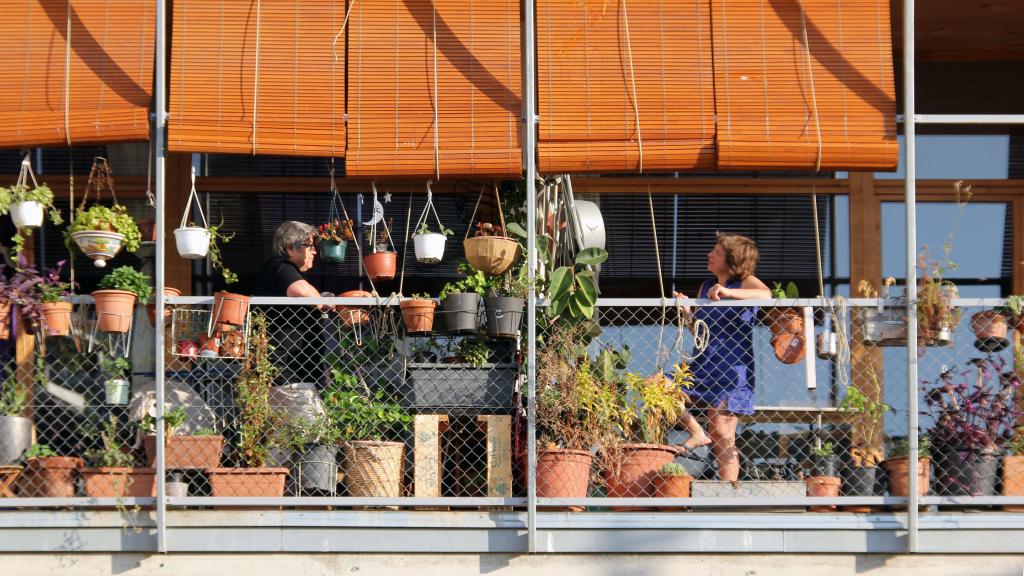
Lacol is a non-profit cooperative of architects founded in 2014 in the Sants neighbourhood, Barcelona, aiming to generate community infrastructure for sustainable living, as a key tool for eco-social transition, through architecture, cooperativism and participation. Lacol has been recognised locally, nationally and internationally, and received in 2022 the Mies van der Rohe Award in the Emerging category, in 2021, the Moira Gemmill Prize (Women Award by Architectural Review) and the same year the cooperative's work was widely exhibited at the Venice Biennale of Architecture.
Cristina Gamboa is a co-founder of Lacol, where she researches on participative approaches to design and the development of cooperative housing projects, including the LaBorda Housing Co-op. She currently teaches at the AA in London at the Master in Architecture and Urban Design - Projective Cities, and is Associate Professor of Contemporary Collective Housing at ETSAB in Barcelona
WOHNEN
abitare oggi/living today
In years of a necessary overall rethinking of architectural making, can the search for archetypes and common roots offer strategies for new paradigms of living? The changed social and economic, cultural and psychological needs of populations lead to the search for innovative housing typologies and new flexibilities, associated with the experiences of shared and collaborative living, which will increasingly have to be combined with productive-entrepreneurial, commercial, and cultural dissemination activities, in addition to the essential facilities/services open to residential neighbourhoods. This is why, for example, revisiting experimental settlement patterns of the past referring to different cultures and geographical areas may once again become highly relevant. All this necessarily goes through processes that must be able to subvert established prejudices and to dismantle mental superstructures and cultural mechanisms linked to planning-administrative and economic development models that are by now obsolete and no longer pursuable, also in respect for future generations.
The lecture series intends to bring attention back to a key topic in architectural education by bringing to the Academy of Mendrisio a series of European architectural practices that in different ways have successfully addressed the issue of living.
Free entrance subject to availability.
The Lecture is also streamed live on www.arc.usi.ch